Aviation Already Wrote the Playbook for Agentic AI
Oct 25, 2026 · chand.sooran@getsextant.ai · 5 min read
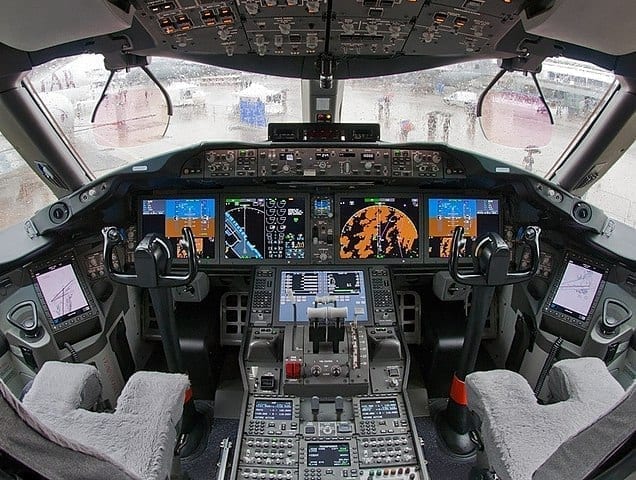
When it comes to automation, the aviation industry has led the way for upwards of forty years with notable gains in productivity, reliability, and safety including:
· Modern cockpit systems enabled aircraft previously requiring three crew members to operate with two
· According to Airbus, generation 4 jets equipped with fly-by-wire technology and flight envelope protection have a 91% lower fatal loss-of-control flight accident rate compared to generation 3 jets
· The baggage mishandling rate fell by 67% between 2007 and 2024
· Digital communications between controllers and pilots avoided 539,000 readback errors from March 2019 through April 2023
Achieving these gains required specific choices about what people would continue to do, what machines could take over, how they would work together, and what happens when something goes wrong.
Businesses implementing AI and agentic solutions face these same organizational and operational questions.
What can aviation teach us?
Establish a Common, Concise Language for Validated Information
Aviation coordinates tens of millions of flights each year across countries, languages, and organizations. Standard terminology, defined units, and readbacks of critical instructions give pilots and controllers a common understanding. Within aircraft, data interfaces allow systems to exchange information with one another and with air crew.
Dependable automation requires consistent meaning and trustworthy inputs. Concise communications focus people and systems on what matters.
Supply chains face the same coordination problem.
Companies (and systems within the same company) use different definitions for quantities, delivery dates, inventory, order status, and other key facts. One system’s “delivery date” may mean shipment from the supplier; another may mean arrival at the customer.
Before we trust agents with operational decisions, it is vital to establish shared definitions for the information these systems require. A common language simplifies integration, makes output and performance easier to assess, and helps agents coordinate across systems and organizations.
Map participating systems to those definitions, validate inputs, and identify missing, stale, or conflicting information. Include enough context to support the decision. Avoid unnecessary fields that add complexity and opportunities for error. A common, parsimonious data model gives that information consistent meaning.
AI makes information easier to process. Giving AI the right information (and only what is necessary) is critical to success.
Give Automation Defined Authority
The Airbus A320 entered commercial service in 1988 with digital fly-by-wire controls. Fly-by-wire computers process commands from pilots or the autopilot and send electrical signals to actuators that move the aircraft’s control surfaces. Autopilot performs selected flight-control tasks. Flight envelope protections constrain automated systems to operate within specific limits, such as speed and angle of attack.
The human-in-the-loop is vital.
Pilots monitor the aircraft’s behavior and the automation’s operating mode. When conditions or system failures require it, they may change modes, disconnect the autopilot, or take manual control. Recurrent training and defined procedures prepare them to recognize these situations and respond effectively. In addition to being skilled at flying the plane herself, a good pilot is a good systems manager who understands how these tools work.
Supply chain analytics work well under the right conditions. Too often, especially with AI, people assume that they can throw as much data as possible into the mix and rely on the compute to resolve everything. This doesn’t work well. Conditions aren’t always normal. But the blind reliance on data and compute can lead to some messy situations.
By contrast, effective workflows pre-empt problems related to data collection and management, relying only on what is necessary, presented in a canonical model. Users understand the underlying methods. Most importantly, users fully understand the business tradeoffs to manage, e.g., profits vs. resilience.
Users are engaged.
In successful automated supply chains, an agent may execute routine procedures within agreed limits. Making exceptional commitments requires approval from a human manager. Humans and agents collaborate. Much of their success comes in the way humans and agents work together when their responsibilities overlap.
Design for Exceptions and Prepare People to Handle Them
In an aircraft, automation exists alongside people. Each member of the crew has their assigned responsibilities including systems oversight. Crew members train routinely around failure procedures, learning about incidents and how to deal with them.
Airlines have established frameworks to ensure that the supervision of automation is effective. It revolves around human judgment and deep understanding of what the automation is doing. The pilots retain the ability and authority to intervene.
Airlines have done this because failure can have lethal consequences.
In supply chains, documented procedures often coexist with tacit knowledge: experienced staff know how to handle exceptions, but their reasoning may remain undocumented. Automating the routine workflow can leave this essential judgment outside the system.
Organizations need to make experienced employees’ wisdom explicit and incorporate it into workflows and training. Staff must understand the underlying business processes well enough to recognize when an agent’s actions are inappropriate, intervene effectively, and escalate unfamiliar situations.
Successful deployment requires clear answers to three questions:
Who owns the outcome and handles exceptions?
What happens when information is unreliable or an action fails?
How are actions and outcomes reviewed to improve the workflow?
Just as pilots practice emergencies in the flight simulator, staff need to learn and practice recovery from the outliers that are a normal consequence of doing business in dynamic environments.
AI and Agentic Productivity Gains Are Possible … with the Right Approach
Aircraft flight-control systems operate within extensively tested limits. Generative AI behaves differently and introduces additional uncertainty. The transferable lesson for those seeking to apply automation in the enterprise is the rigor surrounding automation: defined authority, validated inputs, human responsibility, and preparation for failure.
This is what we mean when we talk about “disciplined delegation.”
Start with a bounded workflow. Use a standard, canonical data model. Keep it parsimonious; don’t introduce frivolous data. Validate the data continuously. Define the agent’s authority and assign responsibility for outcomes. Monitor performance and rehearse how people will respond when the workflow fails. Expand agentic autonomy as performance supports it.
Judge success by operating outcomes. In the case of the supply chain, focus on service, cost, working capital, speed, and reliability.
Aviation’s lesson is that automation can increase capacity, reduce routine work, and improve decisions.
The key to success is coordination across agents, between agents and staff, and over supply chains, something incumbent systems do not contemplate.
At Sextant AI, we are building these principles into supply chain collaboration: a common, validated data model, defined agent-assisted workflows, and human responsibility for consequential decisions.
Want to see what Sextant could do for your supply chain?
Book a demo